


Fire Rated Door With Panic Bar And Door Closer For Emergency Exit Routes
2026-06-20 19:29Fire Rated Emergency Exit Door Solution
Fire Rated Door With Panic Bar And Door Closer For Emergency Exit Routes
Emergency exit routes require fire rated doors that can support quick evacuation, reliable closing and long-term daily operation. A fire rated door with panic bar and door closer is commonly used in stairwells, corridors, schools, hospitals, shopping malls, hotels, apartments, factories, warehouses and public buildings. For contractors, developers and overseas project buyers, the door leaf, frame, panic bar, closer, hinges, lock, opening direction, seals, labels and export packaging should be confirmed together before production.
1. Why Emergency Exit Routes Need Panic Bars And Door Closers
Emergency exit routes are designed for fast evacuation during fire or other urgent situations. These routes may include stairwells, exit corridors, basement exits, fire escape passages, service exits and public building evacuation doors. In these areas, the door should open quickly from the exit side while also returning to the closed position after use.
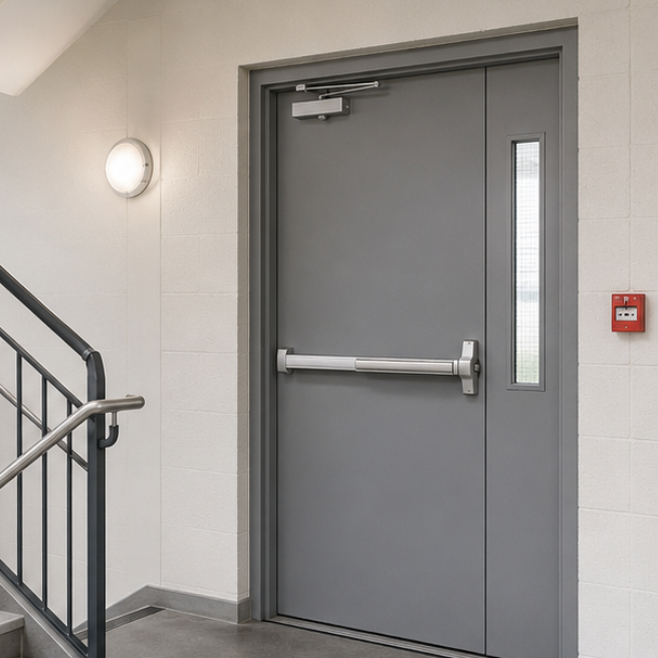
A panic bar allows people to push the door open without using a key or complicated handle operation. This is especially important in schools, hospitals, malls, hotels, factories and other buildings where many people may need to leave quickly. The panic bar should match the door width, opening direction, lock function and frame preparation.
A door closer helps the fire rated door return to the closed position after opening. If the closer is too weak, too strong or installed incorrectly, the door may not close reliably. For emergency exit routes, panic bar and door closer should be selected together with the door leaf, steel frame, hinges and seals.
Fast Exit
Panic bars allow quick door opening from the emergency exit side.
Reliable Closing
Door closers help the fire rated door return to the closed position after use.
Matched Hardware
Panic bar, closer, hinges, lock and frame preparation should match together.
Project Supply
Labels, hardware sorting and export packaging help reduce installation mistakes.
2. Confirm Door Type, Opening Direction And Hardware Layout
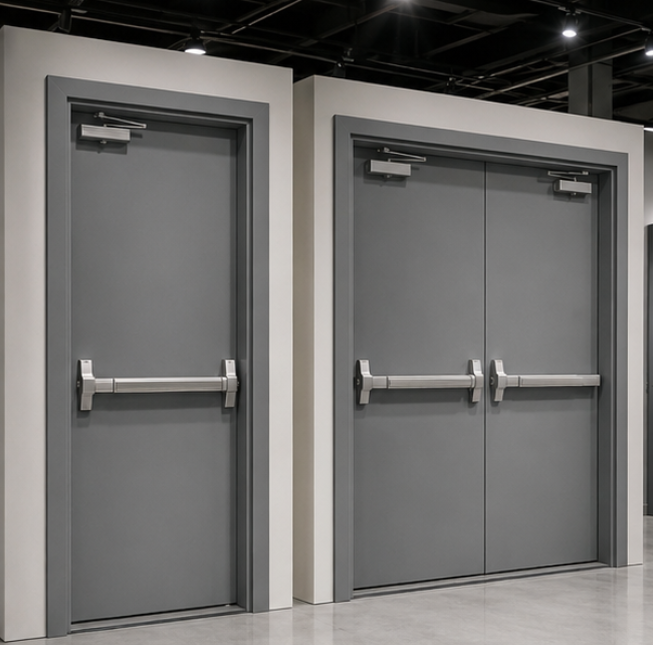
Before ordering a fire rated door with panic bar and door closer, buyers should confirm the door type first. Single leaf doors, double leaf doors and unequal leaf doors require different panic bar layouts and hardware preparation. A double leaf emergency exit door may also need a coordinator, flush bolt or special closing sequence arrangement.
Opening direction is another key detail. Left hand, right hand, inward opening and outward opening will affect hinge side, lock side, panic bar side and door closer installation. For emergency exit doors, the exit direction and daily access function should be checked carefully before production.
The frame and door leaf should be prepared according to the final hardware package. Panic bar mounting holes, closer reinforcement, hinge position, lock preparation, strike plate position, seal groove and threshold details should be confirmed before production to avoid extra drilling or cutting on site.
Fire Rated Door With Panic Bar And Door Closer Checklist
| Project Item | What Buyers Should Confirm | Why It Matters |
|---|---|---|
| Application Area | Stairwell, corridor, basement exit, school, hospital, mall, factory or warehouse | Different exit routes may need different hardware configurations |
| Fire Rating | 60 min, 90 min, 120 min or project-specific fire resistance requirement | Matches fire separation and project acceptance needs |
| Door Type | Single leaf, double leaf, unequal leaf or fire exit steel door | Affects panic bar layout and closing sequence |
| Opening Direction | Left hand, right hand, inward opening, outward opening and exit side | Controls hinge side, panic bar side, closer position and lock direction |
| Panic Bar | Bar type, door width, outside trim, lock function and mounting position | Supports fast evacuation and correct exit door operation |
| Door Closer | Closer strength, mounting side, arm type, closing speed and door weight | Helps the door close reliably after use |
| Steel Frame | Frame type, wall thickness, lock strike, closer support and seal groove | Ensures the hardware matches the complete door set |
| Hinges And Seals | Hinge quantity, load capacity, intumescent seal and smoke seal | Supports door weight, alignment and complete system performance |
| Labels And Packaging | Door labels, hardware labels, hardware boxes, pallets and export protection | Reduces missing parts and jobsite sorting confusion |
3. Match Panic Bar And Door Closer With Real Building Use
Emergency exit doors may be used every day by employees, residents, visitors, students, patients, warehouse workers or maintenance teams. The panic bar and closer should be selected according to traffic frequency, door size, door weight and building area. A door used in a public corridor may need smoother daily operation, while a warehouse exit door may need stronger durability.
In schools and hospitals, the exit door hardware should be easy to operate and reliable under frequent use. In factories and warehouses, the hardware should be more resistant to impact, dust and heavy operation. In hotels and apartments, appearance consistency and quiet operation may also be important.
Buyers should request a clear hardware schedule for bulk orders. The hardware schedule should match each door number with its panic bar, closer, lock, handle, hinge, seal and accessory set. This reduces confusion when many similar doors are delivered to the project site.
4. Control Hardware Sorting, Labels, Packaging And Export Delivery
Panic bars, door closers, hinges, locks, handles, seals, screws and fixing accessories should be packed clearly for overseas project orders. If hardware boxes are mixed, installers may waste time sorting parts or discover missing accessories during installation.
Hardware labels should show door number, floor, room location, opening direction and hardware set. Door labels should also match the door schedule. This is especially useful for projects with many emergency exit routes, stairwells, corridors and service areas.
Before shipment, buyers should request inspection photos, hardware packing photos, door label photos, packing list and loading photos. Proper packaging can protect door leaves, frames, panic bars, closers and accessory boxes during loading, sea freight, unloading and site handling.
Information Needed For A Fire Rated Exit Door Quote
Conclusion: Panic Bar And Door Closer Should Be Confirmed Before Production
A fire rated door with panic bar and door closer for emergency exit routes should be selected as a complete door system. Buyers should confirm the door leaf, frame, opening direction, panic bar, closer, hinges, locks, seals, labels, hardware packing and export packaging before production.
If you need fire rated emergency exit doors for stairwells, corridors, schools, hospitals, hotels, apartments, factories, warehouses or public buildings, send us your door schedule, drawings, fire rating, frame type, opening direction, panic bar requirement, door closer requirement and quantity. JIAHUI can help review the details and provide a suitable project quotation.
Need Fire Rated Doors With Panic Bars And Door Closers?
Send your project drawings, door schedule, fire rating, opening size, frame type, panic bar requirement, closer requirement and quantity. Our team will help you confirm the suitable configuration and provide a project quotation.
Buyer Confirmation Notes For Fire Door Hardware Package
For export buyers, contractors and project owners, Fire Rated Door With Panic Bar And Door Closer For Emergency Exit Routes should be reviewed as part of a complete fire door package rather than a single door leaf. A useful inquiry should state the building type, opening size, wall structure, fire rating, required certificate, door swing, leaf material, frame type, hardware set, finish color, quantity and delivery schedule. These details help Jiahui confirm whether the project needs a steel doorset, timber doorset, industrial door, civil door or mixed door schedule.
Recommended Product Route
The most relevant product route for this topic is fire door hardware checklist. Buyers can also compare the full door product range, Fire Rated Door, Fire Resistant Steel Doorsets, Fire Resistant Timber Doorsets, Industrial Door, and Civil Door. This internal route helps both search engines and real visitors understand how the article connects to purchasable products.
Certificate And Door Schedule Checks
Before placing an order, confirm panic bar model, door closer force, hinge grade, lockset, smoke seal, threshold and replacement spare parts. Fire door projects also need clear door numbers, room names, opening width and height, wall thickness, handedness, vision panel requirements, louver requirements, door closer specification, panic bar requirement, smoke seal position and installation responsibility. For faster quotation, use the door schedule preparation guide and the fire rated door hardware checklist as supporting references.
Installation And Acceptance Points
On site, the installer should check frame verticality, diagonal tolerance, anchor strength, gap around the leaf, closer speed, latch engagement, panic bar operation, smoke seal continuity and final label position. A fire rated door can lose performance if the frame gap is too large, the closer is weak, the seal is cut, or the hardware is replaced with an untested part. This is why the article should guide buyers toward a complete doorset and documented inspection process.
RFQ Information For Faster Response
To make the inquiry easier to convert, prepare drawings, door schedule, certificate target, hardware brand preference, finish requirement, packing method, destination port and expected lead time. Buyers can send these details through the Jiahui contact page. A complete brief helps the supplier answer with real product recommendations, quotation scope, delivery plan and after sales support instead of a generic price.