


Fire Rated Door Hardware Guide: Hinges, Closers, Locks And Panic Bars
2026-05-19 16:15Fire Rated Door Hardware Guide
Fire Rated Door Hardware Guide: Hinges, Closers, Locks And Panic Bars
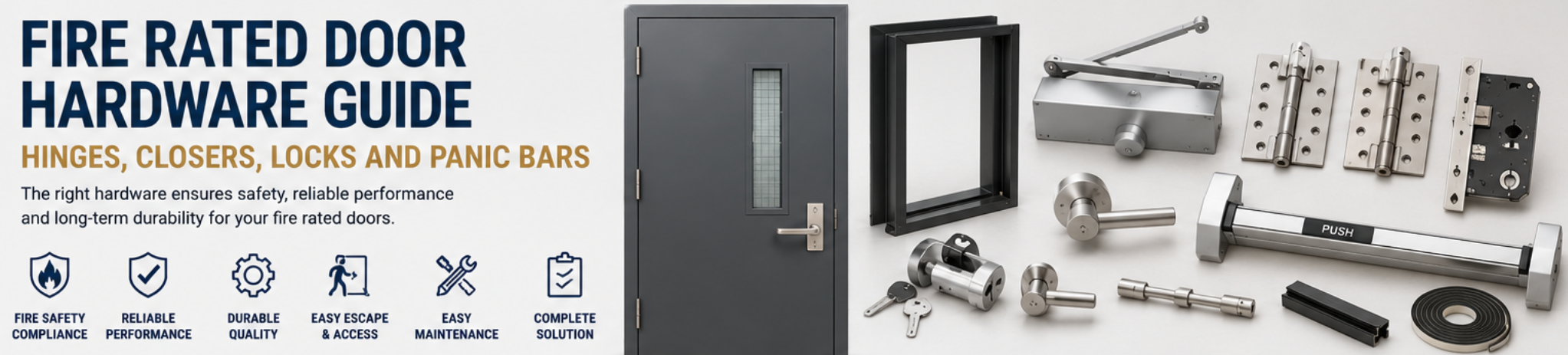
Fire rated door hardware is an important part of the complete fire door system. Hinges, door closers, locks, handles, panic bars, coordinators, seals and thresholds directly affect safety, daily operation, evacuation performance and long-term maintenance. For commercial buildings, hotels, apartments, hospitals, schools, factories, warehouses and public facilities, buyers should select hardware according to fire rating, door size, door weight, opening direction, traffic frequency and project application area.
1. Why Hardware Matters In A Fire Rated Door System
A fire rated door is not only a door leaf and frame. Hardware controls how the door opens, closes, locks and performs during daily use. If the hinges are weak, the door may sag. If the closer is not suitable, the door may not close properly. If the lock, handle or panic bar is not matched correctly, users may face access problems or evacuation risks.
Hardware selection should be based on the complete door system. Buyers need to consider door size, door weight, fire rating, frame type, opening direction, application area and usage frequency. A stairwell fire door, hospital corridor door, hotel service door and factory exit door may all require different hardware configurations.
For project procurement, hardware should be confirmed before production. This helps avoid wrong drilling positions, wrong lock direction, missing accessories, poor closing performance and installation delays at the jobsite.
Hinges
Support door weight and keep the door leaf aligned with the frame.
Door Closers
Help the door close reliably after opening, especially in fire zones.
Locks & Handles
Control access, daily operation and user convenience.
Panic Bars
Support quick exit in emergency routes and public building applications.
2. How To Choose Hinges, Door Closers And Locks
Hinges carry the door leaf weight and affect long-term alignment. Fire rated steel doors are often heavier than ordinary doors, so buyers should choose hinges according to door size, door weight and usage frequency. For high-traffic areas such as stairwells, schools, hospitals and public corridors, stronger hinges are recommended.
Door closers are essential for fire rated doors because the door should return to the closed position after use. A closer that is too weak may fail to close the door fully. A closer that is too strong may make daily use uncomfortable, especially in hospitals, schools, apartments and public buildings. The closer should be selected based on door width, weight, location and expected traffic.
Locks and handles should match the application area. A hotel service room, apartment stairwell, hospital corridor, warehouse exit and office equipment room may require different lock functions. Buyers should confirm whether they need standard locks, lever handles, cylinders, access control preparation or emergency exit hardware.

Fire Rated Door Hardware Selection Checklist
| Hardware Item | What To Check | Why It Matters |
|---|---|---|
| Hinges | Door weight, leaf size, opening frequency and hinge quantity | Keeps the door stable and prevents sagging during long-term use |
| Door Closer | Closer strength, closing speed, door width and application area | Helps the fire door close reliably after opening |
| Lock | Lock type, cylinder, access function and opening direction | Controls security, access and daily operation |
| Lever Handle | Handle style, material, position and user operation comfort | Improves user experience in commercial and public buildings |
| Panic Bar | Exit route requirement, door width and emergency operation | Supports quick evacuation in public and emergency exit areas |
| Coordinator | Double leaf door closing sequence and latching order | Helps double doors close in the correct order |
| Intumescent Seal | Seal position, frame compatibility and door gap condition | Supports sealing performance and door system integrity |
| Threshold | Floor condition, access requirement and sealing design | Improves bottom sealing and door system matching |
3. When Should Buyers Use Panic Bars And Coordinators?
Panic bars are commonly used on fire exit doors, public building exits, schools, shopping malls, hospitals, transport stations and emergency evacuation routes. They allow users to push the door open quickly from the exit side. For buildings with heavy pedestrian flow, panic hardware can improve evacuation efficiency and daily safety.
Not every fire rated door needs a panic bar. For equipment rooms, service rooms or controlled access areas, a lock and lever handle may be more suitable. Buyers should choose panic bars according to the door location, building use, evacuation route and project requirement.
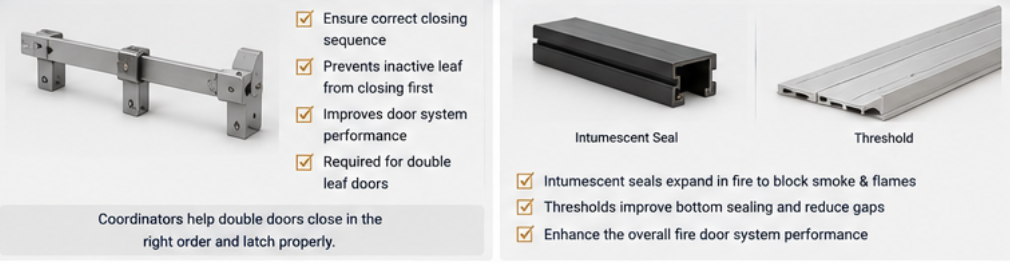
Coordinators are often used for double leaf fire rated doors. They help the active leaf and inactive leaf close in the correct sequence. Without a suitable coordinator, the door leaves may not latch properly, especially when the door is frequently used in corridors, stairwells and public access areas.
4. Confirm Hardware Position, Finish And Packaging Before Production
Hardware position should be confirmed before production because it affects door drilling, reinforcement, lock cutout, handle height and panic bar layout. If the position is wrong, the door may need rework, replacement or jobsite modification. Buyers should confirm drawings and opening direction before mass production starts.
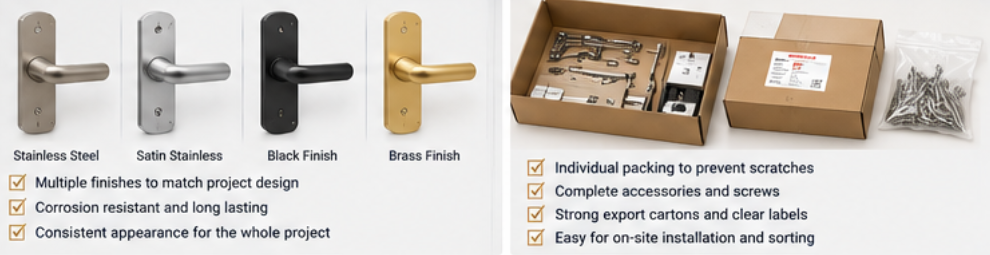
Hardware finish and appearance should also match the building design. Stainless steel, brushed metal, painted hardware or other finishes may be selected according to the project style. For hotels, hospitals, apartments and office buildings, hardware appearance can affect the final interior result.
Hardware packaging should not be ignored. Hinges, closers, locks, handles, panic bars, coordinators, screws and seals should be packed clearly, preferably by door set or with labels. This helps the installation team avoid missing parts and reduces jobsite confusion.
Information Needed Before Quoting Fire Door Hardware
Conclusion: Fire Rated Door Hardware Should Match The Door System
Hinges, closers, locks and panic bars should be selected according to the full fire rated door system. Buyers need to consider fire rating, door size, door weight, frame type, opening direction, usage frequency and building application. The right hardware package improves safety, smooth operation, reliable closing and long-term performance.
If you need fire rated doors with suitable hinges, closers, locks, panic bars and hardware accessories for a commercial building, hotel, apartment, hospital, school, factory, warehouse or public facility project, send us your door schedule, drawings, fire rating, size list and hardware requirement. JIAHUI can help review the details and provide a suitable project quotation.
Need Fire Rated Doors With Matched Hardware?
Send your project drawings, door schedule, fire rating, opening size, frame type, hardware list and quantity. Our team will help you confirm the suitable hardware configuration and provide a project quotation.
Related product and article resources
For procurement comparison and technical evaluation, readers can continue with these related product pages and supporting articles.
- Products
- Product catalog
- Contact the sales team
- Contact us
- 120 Minute Fire Rated Steel Doors With Frame For Industrial Buildings
- 60 Min vs 90 Min vs 120 Min Fire Rated Doors: Key Differences
- 90 Minute Fire Rated Steel Door Supplier For Commercial Building Projects
- Bulk Fire Rated Door Sets From China For Hotel And Apartment Developers