



How To Choose Fire Rated Doors For Hospitals And Healthcare Buildings
2026-05-17 16:08Fire Rated Door Selection Guide
How To Choose Fire Rated Doors For Hospitals And Healthcare Buildings
Fire rated doors for hospitals and healthcare buildings must support fire safety, patient movement, staff access, evacuation routes, hygiene requirements and long-term daily operation. Unlike ordinary commercial buildings, hospitals often include patient rooms, corridors, stairwells, operating areas, equipment rooms, pharmacy areas, laboratories, emergency exits and service zones. Buyers should check fire rating, door size, frame type, hardware, vision panel, surface finish, accessibility, packaging and project drawings before placing an order.
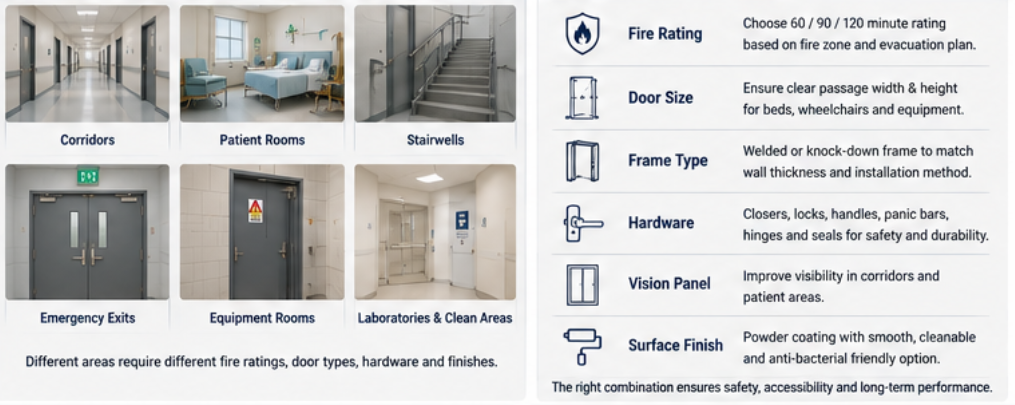
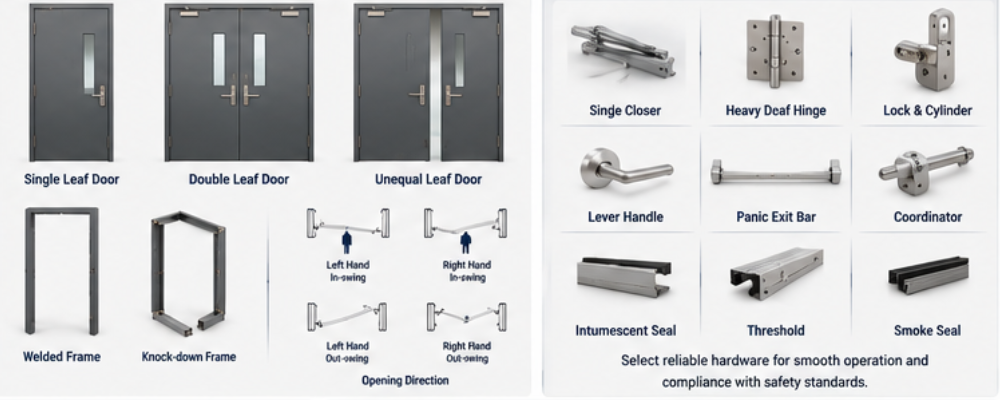
Hospitals and healthcare buildings have many different door locations, and each area may require a different fire rated door configuration. Doors used in corridors and stairwells should support safe evacuation and frequent daily use. Doors used for equipment rooms, laboratories or storage areas may need stronger durability, better sealing and suitable hardware matching. Patient areas require smooth operation because beds, wheelchairs, medical carts and staff may pass through frequently. Emergency routes need reliable closing performance and easy access. Service areas may focus more on strength, impact resistance and surface durability. Therefore, buyers should not use one standard fire door specification for the whole hospital project. Before requesting a quotation, classify the door locations first. Confirm whether each door is used for a corridor, ward area, stairwell, emergency exit, equipment room, pharmacy, laboratory, basement, storage area or service room. This helps the manufacturer recommend a suitable fire rating, frame, hardware and surface finish. Require safe evacuation, smooth traffic flow and durable daily operation. Need easy opening, quiet closing and clean surface appearance. Often require stronger structure, secure hardware and accurate frame matching. Focus on fire rating, panic hardware, clear opening width and reliable closing. Fire rating should be selected according to the hospital fire compartment plan, evacuation route and project drawings. Common options may include 60 minute, 90 minute or 120 minute fire rated doors depending on the building area. A corridor door, stairwell door and equipment room door may not require the same rating. Door size is especially important in healthcare buildings. Some openings need to allow beds, wheelchairs, medical carts and equipment to pass through smoothly. Buyers should provide clear opening width, opening height, wall thickness, installation tolerance and door type before production. Single leaf, double leaf and unequal leaf doors may be used in different hospital areas. Frame type should match the wall structure and installation method. Welded frames, knock-down frames or customized frame profiles may be selected according to site conditions. If the frame does not match the wall thickness or opening tolerance, installation can become difficult and may cause extra project cost. Hardware selection is critical for hospital fire rated doors. Doors in healthcare buildings are often used frequently by patients, doctors, nurses, cleaners, security teams and maintenance staff. Hardware should support smooth operation, reliable closing and long service life. Common hardware options include heavy-duty hinges, door closers, locks, lever handles, panic exit bars, coordinators, thresholds, intumescent seals and access control preparation. For corridors and patient areas, smooth and controlled closing is important. For emergency exits, panic hardware may be needed. For double leaf doors, coordinators can help ensure correct closing sequence. Vision panels are also useful in healthcare buildings because they improve visibility and help staff see movement on the other side of the door. Buyers should confirm the size, position and shape of the vision panel before production, especially when it needs to match the lock, handle or panic bar layout. Surface finish matters in hospitals and healthcare buildings because doors are visible, frequently touched and often cleaned. A suitable powder coating, smooth surface, anti-rust treatment and consistent color can improve both appearance and long-term durability. For high-traffic corridors and service areas, stronger surface protection may reduce scratches and maintenance issues. Buyers should also consider batch consistency. Hospital projects may require many doors in the same color or design. Confirming color samples and surface finish before mass production can reduce visible differences after installation. Export packaging should protect door leaves, frames, hardware and vision panels during long-distance transportation. Foam protection, corner guards, pallets, wooden crates and clear door labels help reduce damage and make jobsite installation easier. Choosing fire rated doors for hospitals and healthcare buildings requires more than checking fire rating alone. Buyers should compare application area, door size, frame type, clear passage width, hardware, vision panel, surface finish, cleaning needs, packaging and installation conditions. A suitable door system can support fire safety, patient movement, staff access and long-term facility operation. If you need fire rated doors for a hospital, clinic, healthcare center, laboratory, nursing facility or medical building project, send us your door schedule, drawings, fire rating, size list, frame type, hardware requirement and quantity. JIAHUI can help review the details and provide a suitable project quotation. For procurement comparison and technical evaluation, readers can continue with these related product pages and supporting articles. Send your project drawings, door schedule, fire rating, opening size, frame type, hardware list, vision panel requirement and quantity. Our team will help you confirm the suitable configuration and provide a project quotation.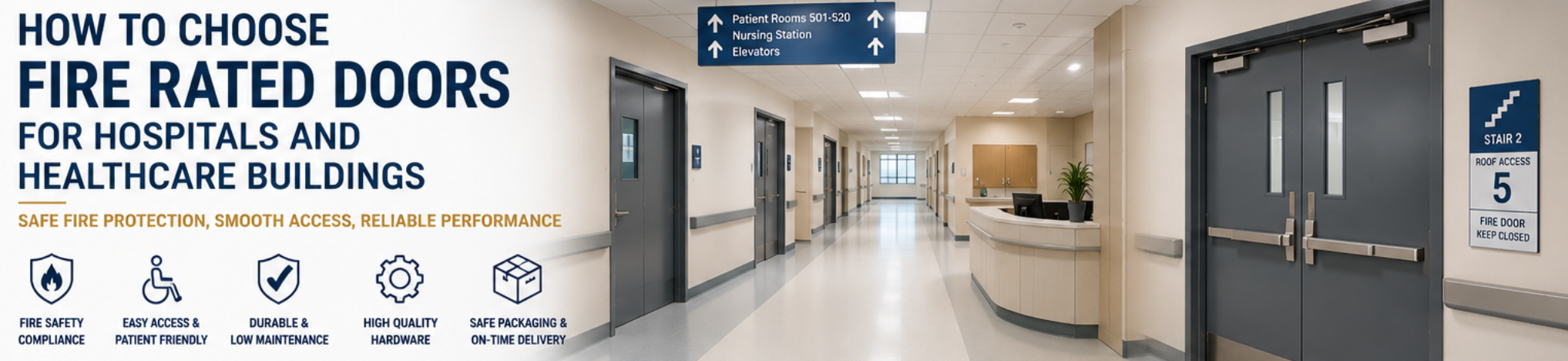
1. Start With The Hospital Area And Door Function
Hospital Corridors
Patient Areas
Equipment Rooms
Emergency Exits
2. Confirm Fire Rating, Door Size And Frame Type
Hospital Fire Rated Door Selection Checklist
Selection Item What To Confirm Why It Matters Application Area Corridor, ward, stairwell, equipment room, laboratory or exit Different hospital areas need different door configurations Fire Rating 60 min, 90 min, 120 min or project-specific requirement Matches fire separation and evacuation route requirements Door Size Opening width, height, wall thickness and clear passage width Supports beds, wheelchairs, carts and medical equipment movement Frame Type Welded frame, knock-down frame or custom frame design Improves installation accuracy and long-term door performance Hardware Hinges, closer, lock, handle, panic bar, coordinator and seals Affects safety, access control, daily use and maintenance cost Vision Panel Glass size, position, shape and door leaf compatibility Improves visibility in corridors, wards and healthcare access areas Surface Finish Powder coating, color, texture, anti-rust and easy-clean surface Supports hygiene, appearance and long-term durability Packaging Foam, corner protection, pallets, wooden crates and labels Reduces shipping damage and jobsite sorting confusion 3. Choose Hardware For Safety, Accessibility And Daily Operation
4. Check Surface Finish, Cleaning Needs And Export Packaging

Information Needed For A Hospital Fire Door Quote
Conclusion: Hospital Fire Rated Doors Should Balance Safety, Access And Daily Use
Need Fire Rated Doors For A Hospital Or Healthcare Project?
Related product and article resources