


How To Choose Fire Rated Steel Doors For Commercial Buildings
2026-04-30 14:46Fire Rated Door Procurement Guide
How To Choose Fire Rated Steel Doors For Commercial Buildings
Choosing fire rated steel doors for commercial buildings is not only about selecting a door leaf. Buyers need to consider fire rating, door structure, frame design, hardware compatibility, project application, installation conditions, and long-term maintenance. A suitable fire rated steel door can help protect escape routes, divide fire zones, improve building safety, and reduce procurement risks in hotels, office buildings, apartments, hospitals, schools, shopping malls, factories, and public facilities.
1. Start With The Building Application And Fire Zone Requirement
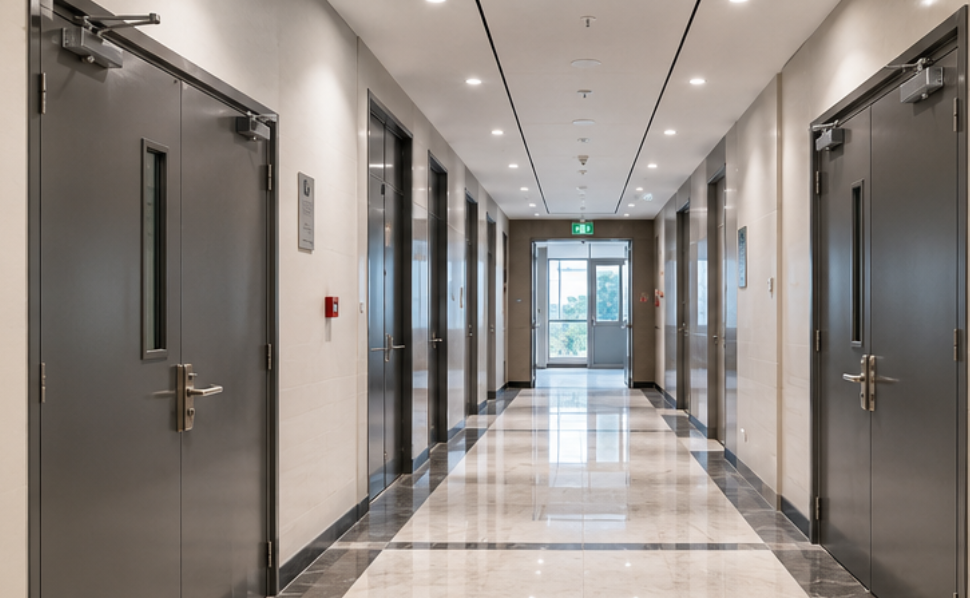
Before choosing a fire rated steel door, the first step is to understand where the door will be installed. Commercial buildings usually have different fire protection requirements for stairwells, corridors, equipment rooms, basement areas, emergency exits, service rooms, and public access zones. A door used for a hotel corridor may not have the same configuration as a door used in an electrical room or factory warehouse.
For example, doors installed in escape routes often need reliable closing performance, durable hinges, door closers, panic exit devices, and stable frames. Doors used for electrical rooms may require stronger sealing, higher durability, and customized sizes. Doors for office buildings and shopping malls may also need better surface finishing to match the interior design.
A good selection process should not begin with price only. Buyers should first confirm the project type, fire resistance requirement, opening size, door direction, wall condition, usage frequency, hardware requirement, and finishing preference. This helps the manufacturer recommend a suitable fire rated steel door solution instead of a generic product.
Commercial Buildings
Suitable for office corridors, public areas, stairwells, and fire separation zones.
Hotels & Apartments
Requires stable fire performance, neat appearance, and reliable long-term use.
Public Facilities
Often needs durable hardware, high-frequency opening resistance, and safety function.
Factories & Warehouses
Focuses on strength, size customization, impact resistance, and efficient delivery.
2. Compare Fire Rating, Door Leaf Structure And Frame Design
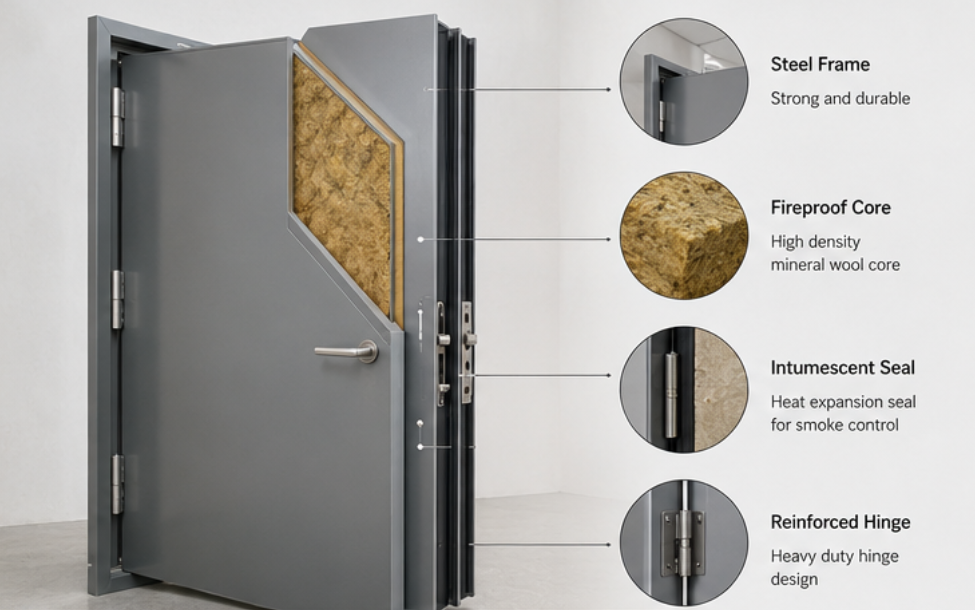
Fire rated steel doors are commonly selected according to fire resistance time, such as 60 minutes, 90 minutes, or 120 minutes. However, fire rating alone is not enough. Buyers should also review the door leaf thickness, steel sheet thickness, inner core material, frame structure, sealing design, hinge reinforcement, and hardware compatibility.
The door leaf should be strong enough for daily commercial use, while the frame should match the wall opening and installation method. If the frame is not properly selected, the door may be difficult to install, may not close smoothly, or may have gaps that affect performance. For overseas projects, it is especially important to provide accurate wall thickness, opening size, and installation drawings before production.
Surface finishing is another important detail. Powder coating, color matching, anti-rust treatment, and protective packaging can all influence the final appearance and project delivery quality. For commercial buildings, the door is often part of the visible interior environment, so durability and appearance should be considered together.
Key Specifications Buyers Should Confirm
| Item | What To Check | Why It Matters |
|---|---|---|
| Fire Rating | 60 min, 90 min, 120 min or project-specific requirement | Determines fire resistance performance for different building zones |
| Door Size | Opening width, height, wall thickness and tolerance | Avoids installation problems and wrong frame production |
| Door Type | Single leaf, double leaf, unequal leaf, with or without vision panel | Matches traffic flow, opening width and project usage |
| Hardware | Hinges, closer, lock, panic bar, handle, coordinator | Affects safety, daily operation and maintenance cost |
| Surface Finish | Powder coating, color, anti-rust treatment and surface texture | Improves appearance and long-term durability |
| Packaging | Corner protection, foam, pallet, crate or export packaging | Reduces transport damage for overseas projects |
3. Choose Hardware According To Safety, Traffic Flow And Daily Use
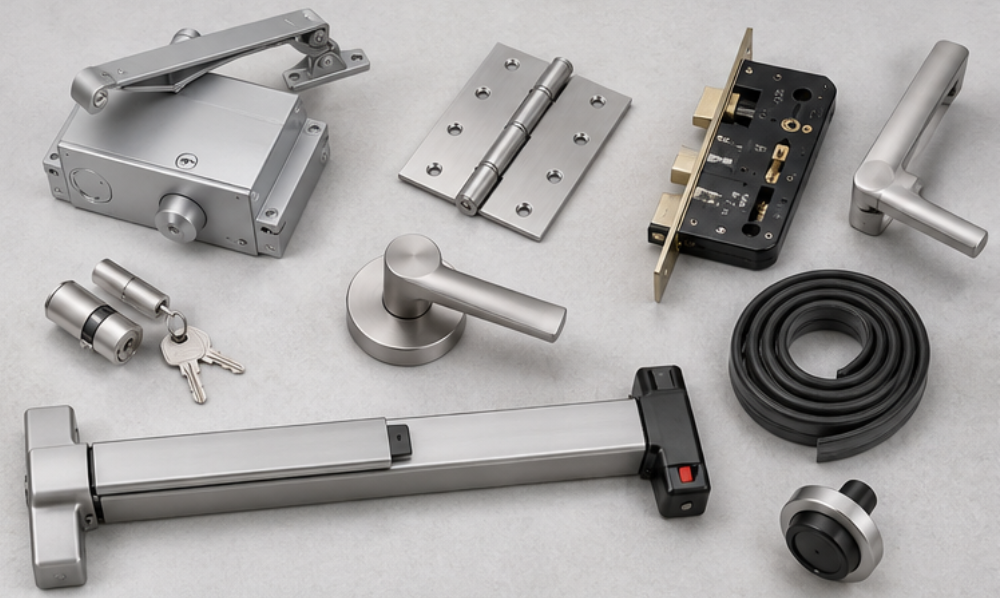
Hardware is one of the most common areas where buyers make mistakes. A fire rated steel door is not only a steel panel and frame. Hinges, locks, door closers, panic bars, handles, coordinators, seals, and vision panels must work together as a complete door system.
For high-traffic commercial buildings, hardware should be selected for frequent opening and closing. For stairwell doors, self-closing performance is especially important. For emergency exits, panic exit devices may be required depending on the building design. For double-leaf doors, coordinators and proper latching design should be considered to ensure the door closes in the correct sequence.
Buyers should avoid selecting hardware only by appearance or lowest cost. The better approach is to provide the door schedule, floor plan, opening direction, usage area, and hardware requirement to the manufacturer. This helps ensure that the door leaf, frame, and hardware package are matched before production.
4. Check Manufacturing Capability, Customization And Delivery Control
Commercial building projects often require many doors in different sizes, directions, colors, and hardware configurations. This means buyers should not only compare a single product price. They should also check whether the manufacturer can handle customized production, batch order management, consistent surface finishing, packaging control, and delivery coordination.
A professional fire rated steel door manufacturer should be able to review the door schedule, identify unclear information, suggest suitable configurations, and provide production details before the order is confirmed. For project-based procurement, communication accuracy is just as important as manufacturing capacity.
Buyers should prepare clear information before requesting a quotation: door quantity, opening size, wall thickness, fire rating, single or double leaf type, opening direction, hardware list, surface color, packing requirement, destination country, and project timeline. The more complete the information, the faster and more accurate the quotation will be.
Quotation Checklist For Fire Rated Steel Doors
Conclusion: Select Fire Rated Steel Doors As A Complete Project System
For commercial buildings, choosing fire rated steel doors should be treated as a project decision, not a simple product purchase. Buyers need to compare fire rating, door structure, frame design, hardware matching, surface finish, packaging, and manufacturer support. A suitable door system can improve safety, reduce installation problems, and make the whole project easier to manage.
If you are planning a commercial building, hotel, apartment, hospital, school, warehouse, or public facility project, send us your door schedule, sizes, drawings, fire rating requirement, and hardware list. JIAHUI can help you review the details and provide a suitable fire rated steel door solution for your project.
Need Fire Rated Steel Doors For Your Commercial Building Project?
Send your door size, quantity, fire rating, frame type and hardware requirement. Our team will help you confirm the suitable configuration and provide a project quotation.
Related product and article resources
For procurement comparison and technical evaluation, readers can continue with these related product pages and supporting articles.
- Products
- Product catalog
- Contact the sales team
- Contact us
- 120 Minute Fire Rated Steel Doors With Frame For Industrial Buildings
- 60 Min vs 90 Min vs 120 Min Fire Rated Doors: Key Differences
- 90 Minute Fire Rated Steel Door Supplier For Commercial Building Projects
- Bulk Fire Rated Door Sets From China For Hotel And Apartment Developers