



Steel Fire Door vs Wooden Fire Door: Which One Should You Choose
2026-03-12 15:00Fire Rated Door Selection Guide
Steel Fire Door vs Wooden Fire Door: Which One Should You Choose?
Steel fire doors and wooden fire doors are both widely used in commercial buildings, hotels, apartments, hospitals, schools, office buildings and public facilities. However, they are not selected for the same purpose. Buyers should compare fire rating, durability, appearance, application area, hardware compatibility, maintenance, project budget and installation conditions before making a decision. Choosing the right fire door type can reduce procurement risk, improve building safety and support smoother project delivery.
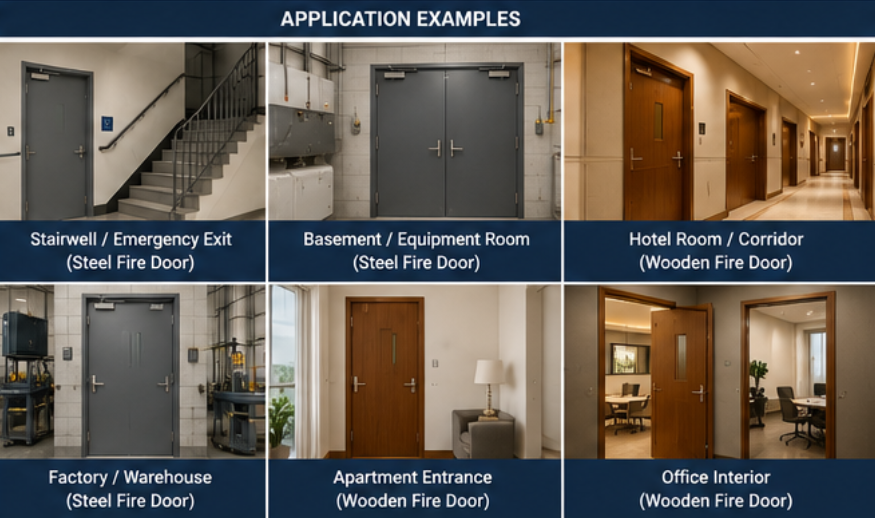
The main difference between steel fire doors and wooden fire doors is not only the material. It also affects durability, appearance, usage environment, maintenance requirements and project cost. Steel fire doors are commonly used in stairwells, corridors, equipment rooms, basements, factories, warehouses, emergency exits and high-traffic public areas. They are valued for strength, impact resistance, stable structure and long-term durability. Wooden fire doors are often used in hotels, apartments, office interiors, residential rooms and areas where appearance is an important part of the interior design. They can provide a warmer visual effect and may be more suitable for guest rooms, apartment entrances, office rooms or interior spaces where decorative style matters. Buyers should not simply ask which one is better. The better question is: where will the door be installed, how often will it be used, what fire rating is required, what appearance is needed, and what hardware configuration should be matched? A practical choice for high-traffic, high-strength and functional areas such as stairwells, fire exits, basements, factories, warehouses, equipment rooms and commercial corridors. A suitable option for interior areas where fire protection and decorative appearance are both required, such as hotel rooms, apartments, office rooms and residential corridors. Steel fire doors usually perform better in areas that require stronger impact resistance, moisture resistance, frequent operation and easier maintenance. For example, in public stairwells, emergency exits, equipment rooms and industrial buildings, steel doors are often preferred because they can handle heavier daily use and more demanding environments. Wooden fire doors are often chosen when visual design is important. In hotels, apartments and office interiors, wooden doors can match interior decoration more naturally. They can be supplied with different finishes, colors or veneer styles, making them more suitable for spaces where the door is part of the interior design. For many building projects, steel fire doors and wooden fire doors are used together. Steel fire doors may be used in stairwells, basements and service areas, while wooden fire doors may be used in guest rooms, apartment entrances or office interiors. A professional door schedule should divide door types by location instead of using one material for the whole project. For hotels, wooden fire doors are often used for guest rooms and interior areas because they provide a warmer appearance. However, steel fire doors are still commonly used in stairwells, service rooms, basements, kitchens, equipment rooms and emergency exits. This combination helps balance appearance, safety and durability. For apartment projects, wooden fire doors may be used for unit entrances or interior residential areas, while steel fire doors are suitable for public stairwells, parking areas, electrical rooms and maintenance access points. Buyers should review the floor plan and classify each door opening before requesting a quotation. For factories, warehouses, schools, hospitals, shopping malls and transport stations, steel fire doors are often the safer and more practical option for many areas because these buildings require stronger durability, frequent operation and easier maintenance. Wooden fire doors can still be considered for selected interior spaces where appearance is more important. Whether buyers choose steel fire doors or wooden fire doors, the basic order information should be confirmed clearly. Fire rating, door size, wall thickness, frame type, opening direction, hardware list, surface finish and quantity should be reviewed before production. These details directly affect installation accuracy and project delivery. For steel fire doors, buyers should pay attention to steel sheet thickness, frame design, hinge reinforcement, surface coating and export packaging. For wooden fire doors, buyers should check door leaf construction, decorative finish, edge sealing, hardware matching and protection during shipping and installation. A complete door schedule is highly recommended for hotel, apartment, commercial and public building projects. It helps the manufacturer identify different door types, sizes, fire ratings, opening directions, hardware packages and finish requirements before mass production. Steel fire doors and wooden fire doors both have clear advantages. Steel fire doors are suitable for functional, high-traffic and high-durability areas, while wooden fire doors are better for interior spaces where appearance and decoration are important. The right choice depends on fire rating, building area, usage frequency, design requirement, hardware configuration and long-term maintenance needs. If you are not sure whether to choose steel fire doors or wooden fire doors for your project, send us your door schedule, drawings, fire rating requirement, application areas and quantity. JIAHUI can help review the details and recommend a suitable fire door solution for your hotel, apartment, commercial building, factory or public facility project. For procurement comparison and technical evaluation, readers can continue with these related product pages and supporting articles. Send your project drawings, door schedule, fire rating, size list, hardware requirement and quantity. Our team will help you confirm the suitable fire door configuration and provide a project quotation.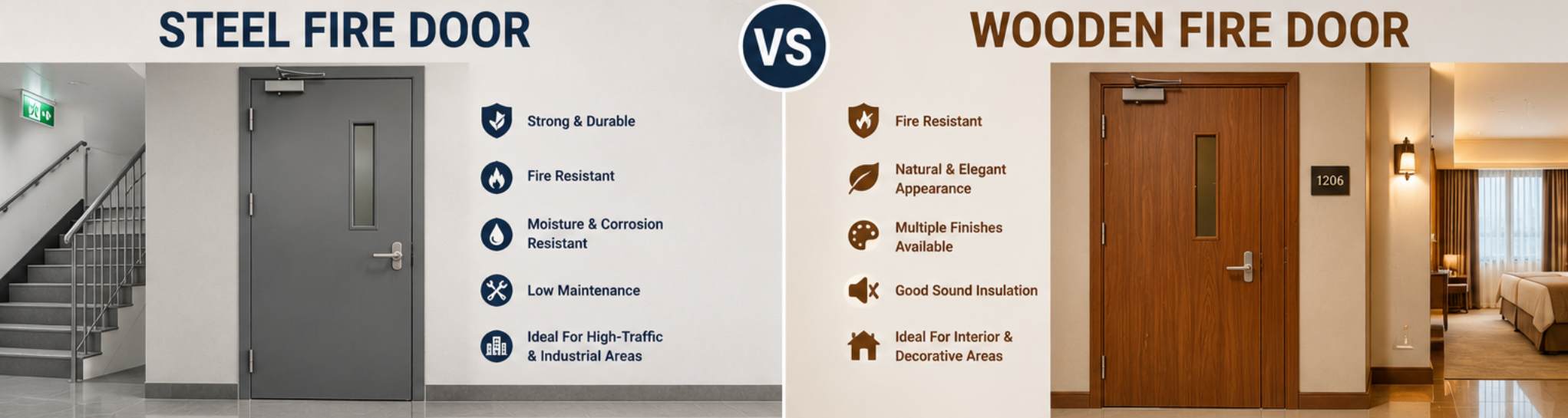
1. Understand The Main Difference Between Steel Fire Doors And Wooden Fire Doors
Steel Fire Door
Wooden Fire Door
2. Compare Durability, Appearance And Application Areas
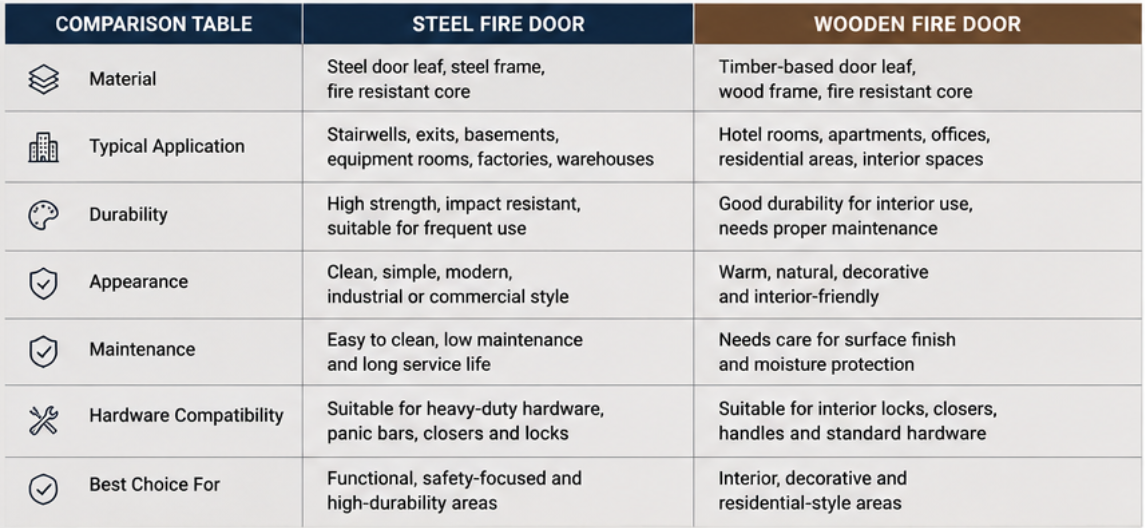
Comparison Table: Steel Fire Door vs Wooden Fire Door
Item Steel Fire Door Wooden Fire Door Buyer Suggestion Main Material Steel door leaf, steel frame and fire resistant core Timber-based door structure with fire resistant core Choose according to strength, design and application area Typical Application Stairwells, exits, basements, equipment rooms, factories, warehouses Hotel rooms, apartments, offices, interior corridors, residential areas Use different door types for different project zones Durability Higher impact resistance and better for frequent use Good for interior use but needs proper maintenance Steel is better for heavy-use and service areas Appearance Clean, functional, industrial or commercial appearance Warmer, more decorative and interior-friendly Wooden fire doors are better for decorative interior spaces Maintenance Easy to clean, strong surface, suitable for high-traffic areas Requires more care for surface finish and moisture control Consider long-term maintenance cost, not only purchase price Hardware Matching Suitable for heavy-duty hinges, closers, locks and panic bars Suitable for interior locks, closers, handles and room hardware Hardware should match door weight, usage and fire rating Best Choice For Functional, safety-focused and high-durability areas Interior, decorative and residential-style spaces Choose by project area instead of choosing one material only 3. How To Choose Based On Project Type
4. Check Fire Rating, Frame, Hardware And Finish Before Ordering

Information Needed For A Fire Door Quote
Conclusion: Choose By Application Area, Not By Material Alone
Need Help Choosing Steel Or Wooden Fire Doors?
Related product and article resources